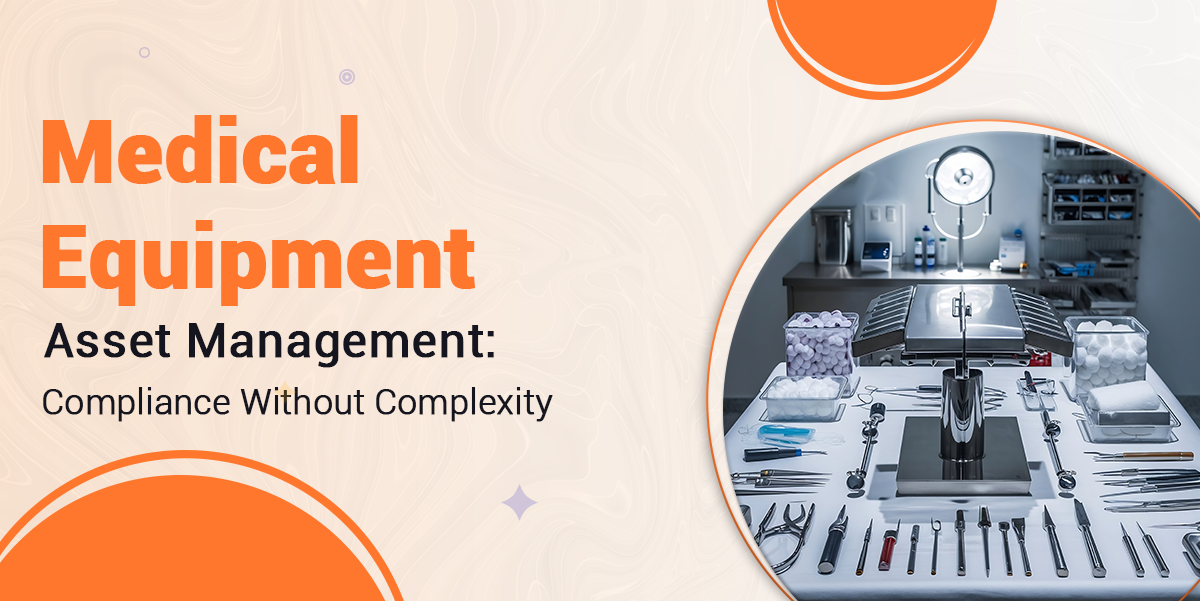
In modern healthcare, safety, efficiency, and regulatory compliance are important. But many hospitals and clinics struggled to keep up with the growing number of medical devices, maintenance schedules, documentation requirements, and audit requirements.
Medical equipment asset management has become one of the most effective solutions that help to reduce operational risk while improving patient care, but only when the system is simple and easy to use and scale.
In this guide, you will explore how healthcare organisations can meet compliance demands without adding unnecessary complexity, using smart tools, automation, and connected processes.
Compliance makes sure the medical devices remain safe, reliable, and ready for use while meeting strict healthcare regulations. Let’s understand why compliance is so important in the medical industry:
Hospitals in Singapore depend on thousands of other critical medical devices, such as ECG machines and ventilators, in addition to infusion pumps and ECG devices.
These tools must be properly managed and in compliance with all appropriate healthcare regulations while being traceable and safe to work with. Industry nowadays is fundamentally concerned with having a complete and accurate audit trail.
Healthcare regulators continuously need up-to-date records for all equipment. Organisations can face serious consequences if inspections are missed or partially completed.
For instance, compliance violations, equipment breakdowns, increased operational expenses, and increased costs. These issues may also result in delayed patient care, which increases safety risks and failed audits, ultimately affecting funding and accreditation.
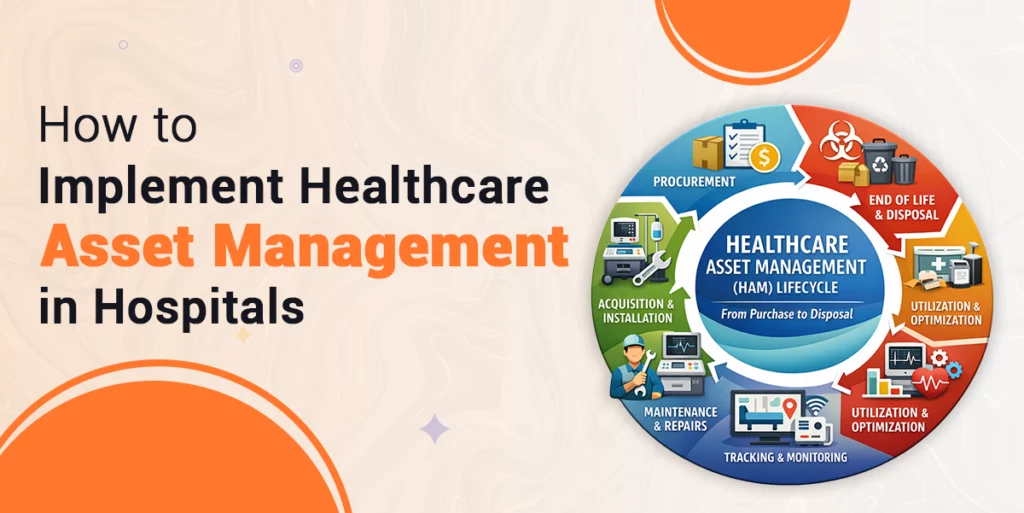
Effective medical equipment asset management offers clarity, accuracy, and control across the entire device lifecycle to make sure every asset is visible, accountable, and compliant from acquisition through disposal.
Sometimes, the advanced asset management system can only succeed when the people using it understand its purpose, functions, and value. In the healthcare sector, where staff work under time pressure and handle critical equipment so effective training becomes central to maintaining strong compliance standards.
Training makes sure the clinical and technical teams understand how to record maintenance events, update asset status, and follow proper documentation processes. This reduces errors, strengthens audit readiness, and ensures every device remains compliant throughout its lifecycle.
When staff are familiar with the workflows and interfaces of a system, they are more likely to use it regularly. In order to maintain engagement, regular refresher training and easy access to quick guides or mobile tools are important.
Properly trained staff can identify non-compliant equipment, report issues promptly, and follow established procedures for device handling. This minimises safety risks and prevents delays in patient care.
The division of responsibility for training between departments is strengthened. When everybody understands the importance of correct documentation, tracking compliance becomes an administrative task from day one.
A strong training framework makes sure that asset compliance is supported not only by technology but also by people who use it every day.
Healthcare organisations no longer need to rely on spreadsheets, paper logs, or manual tracking. Today’s systems use automation, sensors, and centralised data to simplify the full equipment lifecycle. Let’s explore some benefits below:
A modern medical device asset tracking solution gives teams an instant look into:
This removes the guesswork, reduces equipment hoarding, and makes sure the right device is available when clinicians need it.
So, instead of manually logging checks, an intelligent platform automates key steps:
In other words, compliance becomes a built-in function, not an administrative burden.
Leading hospitals are now adopting a medical equipment asset management system for hospitals that integrates with:
This creates a simple operational picture and reduces duplicate data entry or fragmented workflows.
Accurate tracking tools help to prevent unnecessary loss or misplacement of devices by providing:
Modern systems support smarter servicing through:
Data-driven visibility enables efficient resource planning with:
Read More: Key Benefits of Hospital Asset Management
Healthcare environments are complex, fast-moving, and equipment-dependent, but many organisations still struggle to manage assets efficiently, creating gaps that directly impact compliance, safety, and cost control.
In addition, many hospitals don’t know where the equipment is situated or how frequently it’s used. So, staff waste time trying to find devices and equipment that need upkeep, which slows workflows and also increases risk, without appropriate location tracking.
Maintaining accurate service histories is difficult as a result of paper logs and spreadsheets. Missing records, documents, or lost files are able to create gaps in the audit trail, and that may complicate compliance reporting as well as maintenance preparation.
Many organisations find it difficult to keep up with the demands of the market, which may result in increased compliance, audit vulnerabilities, and administrative workload.
If usage data is inaccurate or incomplete, hospitals may purchase unnecessary equipment or leave useful devices idle. This increases the operational costs and reduces the return on investment for critical assets.
The streamlined approach to hospital asset compliance addresses these challenges by centralising information, improving accuracy, and enabling real-time visibility across the entire asset lifecycle.
Also Read: Role of Healthcare Asset Management in Enhancing Patient Care
Complex systems often fail in healthcare environments because teams need tools that are fast, intuitive, and unobtrusive. By simplifying processes and choosing solutions designed for clinical workflows, organisations can maintain regulatory rigour without overwhelming staff.
Implementing barcodes, QR codes, or RFID tags ensures every device is uniquely identifiable. This standardisation enables accurate tracking, consistent documentation, and seamless movement of assets throughout their lifecycle.
Centralising all asset information, including location, utilisation, maintenance records, and compliance logs, which eliminates duplication and reduces the risk of conflicting data. A unified system ensures everyone works from the same reliable source.
Human error is a result of regular compliance tasks, which automation helps to eliminate. Make sure that no crucial activity is left out, strengthening both safety and regulatory compliance, with regular calibration reminders, service alerts, and electronic checklists.
In general, general-purpose tools do not possess the capabilities that are required for meeting the strict healthcare standards.
For correct documentation, smoother audits, and strong alignment with laws and regulations, you have to choose a specialised healthcare compliance asset management solution.
Adoption is the secret element to being successful. Clinical and technical teams are able to work effectively with tools that offer user – friendly dashboards, mobile access, along with minimal training needs, which guarantees constant compliance.
Healthcare compliance is entering a new phase, supported by intelligent technologies designed to simplify, enhance safety, and support better operational decision-making. These advancements are defining how hospitals manage and monitor their equipment.
Hospitals today can predict equipment breakdowns before they happen using artificial intelligence. AI will help to analyse usage patterns and performance information to offer optimum maintenance at the proper time, that help in minimizing downtime and increasing asset life.
Connected medical devices provide real-time insights into location, condition, and utilisation. This continuous data flow supports faster decision-making and improves compliance accuracy.
Centralised dashboards give teams instant access to audit trails, service history, and regulatory documentation. Cloud platforms ensure information remains current, secure, and easy to retrieve.
Algorithms can now assess asset health and compliance risks automatically, which helps hospitals prioritise critical interventions.
As devices become more connected, cybersecurity oversight is essential. Integrated monitoring protects data integrity and ensures assets remain safe and compliant.
The result is a shift towards proactive, predictive compliance that keeps equipment reliable, available, and audit-ready.
If you are looking for an effective asset management solution for better management, try Genic Assets Management Software Solutions!
Simplicity is not different from compliance, but it is the key to achieving compliance consistently. Hospitals can change from reactive to proactive management, with the right systems, and move toward a data-driven, automated model.
Modern asset management tools give medical teams the confidence that their devices are secure, compliant, and ready for patient care without the administrative workload of monitoring assets.
Whether you are updating history processes or implementing a medical device asset tracking system for hospitals for the first time, the goal is the same, which is to enable smarter workflows and better visibility enable compliance without complexity.
Articles you might like





Genic Assets provide complete visibility, traceability, and accountability of your assets!
Get StartedAre you ready to switch from Excel and Spreadsheets to Cloud-based Asset Management Software? Get started with Genic Assets Management System!