Please don't fall for any job/grants/SaaS/Software related scams. For any query or concerns please reach to us directly at +65 6834 3026 or WhatsApp at +65-8910 8216
Please don't fall for any job/grants/SaaS/Software related scams. For any query or concerns please reach to us directly at +65 6834 3026 or WhatsApp at +65-8910 8216
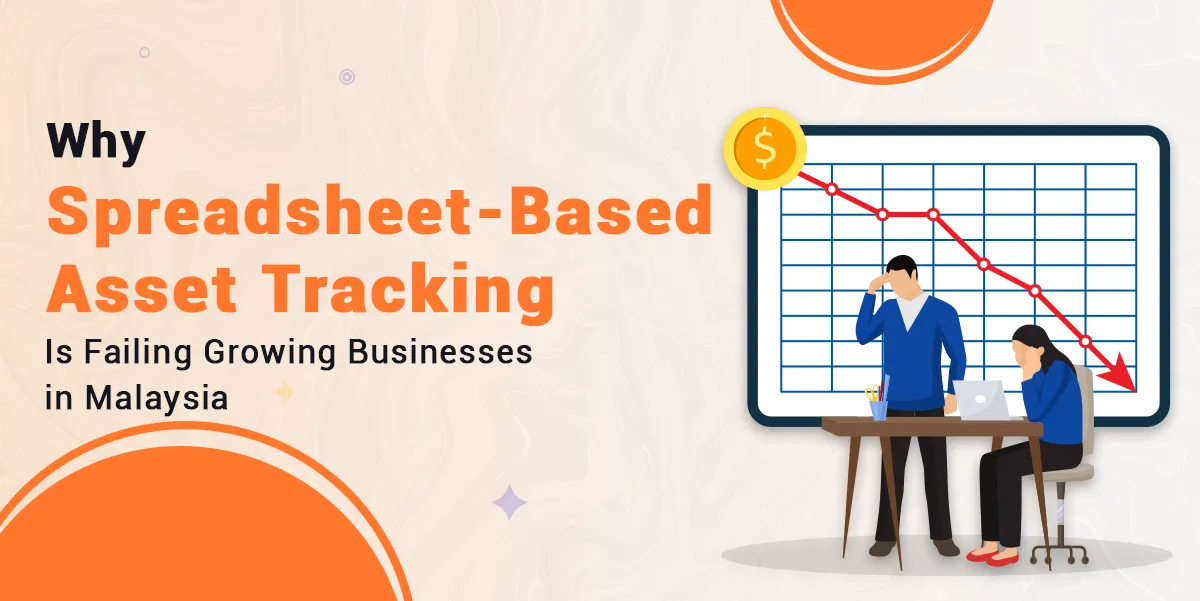
As businesses in Malaysia grow, managing assets becomes harder. What worked with a simple spreadsheet no longer works. As teams get bigger, equipment moves across locations, more people need access, and errors start to increase.
Many businesses still depend on Excel or Google Sheets because they are easy to start. But over time, these tools create more problems than they solve.
This is where the shift towards asset tracking software in Malaysia becomes important. In this guide, we will look at why spreadsheets fail, what challenges Malaysian businesses face, and what a better approach looks like.
Spreadsheets are often the first choice for tracking assets. They are simple and familiar, as most teams already know how to use them, so you can:
For a small setup, this works fine. A company with ten laptops and a few tools can manage with a basic sheet, but growth changes everything.
As your business grows, your asset list grows too, so you may now have:
At this stage, spreadsheets start to fail. This is the core of why Excel fails for asset tracking in Malaysia. It is not about the tool itself, but it’s about scale, control, and visibility.
The process of asset movement between employees creates challenges for tracking which person holds responsibility for each asset.
The spreadsheet requires manual updates because it lacks automatic update functions, which require someone to edit the file and input specific information. Organisations lose their current data when they fail to perform this essential step.
People need to ask about the laptop owner and projector location, or whether the equipment has been returned. Sometimes, organisations face an increased risk of asset disappearance because they fail to maintain accurate and current documentation, which leads to reduced organisational accountability.
Spreadsheets do not provide a live view of your assets. What you see always depends on the last update, which may not be accurate.
In many Malaysian businesses, staff forget to update records, or different versions of the same file are used, as offline edits can also create conflicts. These issues make it hard for teams to trust the data they are working with.
Manual data entry often leads to mistakes. These can include wrong entries, deleted rows, or duplicate records.
Even a minor mistake leads to major problems, which include lost equipment, wrong stock numbers, and operational delays during regular workdays. The spreadsheet becomes more difficult to manage because the increasing number of assets leads to a higher chance of these errors occurring.
Users cannot track their spreadsheet edits because these programs do not provide a detailed record of their modifications. The document editing process lacks visibility because users cannot identify who made changes to the file and what specific modifications were introduced, and at what specific time these changes occurred.
Organisations face critical problems when they fail to track their operations during audit processes and internal assessment activities. Businesses that require compliance with regulations face increased risks because they lack proper audit documentation, which also complicates their reporting process.
When multiple people use the same spreadsheet, collaboration becomes a challenge. Conflicting edits, locked files, and confusion over versions are common problems. Teams often spend more time fixing these issues than actually using the data. This slows down work and reduces overall efficiency.
Let’s look deeper at why Excel fails for asset tracking in Malaysia. The issue is not just technical, but it’s also operational. As businesses grow, the way assets are managed needs to change.
Malaysian businesses are experiencing rapid growth, which mainly affects the technology sector, logistics operations, and service-based companies. So, organisations need to establish proper systems for their expanding teams, while they must define staff duties and build protection systems that stop unauthorised access to vital data.
A spreadsheet does not provide this structure. The system allows any user who has access to perform data editing, deletion, and replacement operations, although these actions might not have been planned.
The absence of control creates a situation where people become disoriented while they make various errors. The file reaches an untrustworthy state because it lacks an established update procedure that specifies the timing and process of updates.
Many businesses in Malaysia operate across multiple locations such as Kuala Lumpur, Penang, and Johor Bahru. Managing assets across these locations using a single spreadsheet quickly becomes difficult.
Teams face challenges when they need to identify exact asset locations because their items travel between different office spaces and various project work areas.
The process of obtaining correct location-based data through filters becomes challenging because organisations lack systems that monitor data transfers in real time. The teams must choose between using their best guesses or conducting physical inspections, which results in slower work processes and a higher potential for losing items.
As businesses grow, they face more pressure to meet audit and reporting requirements. This is common in industries that deal with financial tracking, client assets, or regulated operations.
Spreadsheets make this process harder because they do not provide a clear and reliable history of asset usage. It becomes difficult to prove who was responsible for an item, when it was used, or how its value has changed over time.
During financial reviews, this lack of clarity can create risk and lead to delays, errors, or even compliance issues.
The shift from spreadsheets to systems is not just a trend. It is a response to real problems. Let’s compare spreadsheet vs asset management software in Malaysia.
This is why more businesses are moving towards asset tracking software in Malaysia.
To manage assets well, businesses need more than a list. They need a system that can:
To manage assets well, businesses need more than a simple list. As operations grow, they need a system that brings structure and control.
One of the most important needs is clear ownership. Every asset should be assigned to a specific person, and any change should be recorded automatically.
This helps teams stay accountable and reduces confusion over who is responsible for each item.
Organisations require instant access to their operational assets through real-time visibility systems.
Teams need to monitor their resource availability along with their active usage and their missing items at all times.
Staff members have to spend extra time checking information, which leads to slower work operations because they lack a proper understanding.
Businesses that operate multiple offices, sites, or departments require support to manage their various locations.
The system needs to provide users with straightforward methods to track asset positions and monitor their relocation paths between different locations.
The system lets teams get rid of their guesswork while it helps them work together more effectively.
The system needs to show trackable asset history information, which fulfills the essential requirement.
Organisations must record all check-in activities together with check-out occurrences and transfer events.
The system provides open access to information, which enables users to handle their data more effectively during audit preparation and regular usage monitoring.
Businesses need to lower their manual work requirements as their final step. The system needs to reduce the number of data entry tasks while it protects against human errors and saves operational time, which teams should dedicate to their essential responsibilities.
More businesses are now turning to asset tracking software in Malaysia as their operations expand.
As companies grow, managing assets through spreadsheets becomes harder and less reliable. Teams need better ways to track, manage, and control their resources without constant manual effort.
The rise of remote work and flexible teams has also increased the need for better tracking systems.
Assets are no longer kept in one place. They move between offices, homes, and project sites. This makes it difficult to maintain accurate records without a proper system in place.
Businesses today want more control over their assets while saving time. Manual tracking slows teams down and increases errors.
With better tools, updates become faster and more accurate, helping teams focus on their work instead of managing data.
An asset tracking system for small business in Malaysia is no longer seen as an extra tool. It is now a basic requirement for businesses that want to stay organised, reduce loss, and support long-term growth.
Automated tracking reduces mistakes. Data stays consistent.
Tasks that took hours can be done in minutes.
Every asset has a clear record. Responsibility is easier to track.
With better data, businesses can:
Clear records make audits smoother. No need to search through messy sheets.
When looking for the Best asset tracking software for a growing business, focus on features, not brand names. Look for a system that offers:
Your team should learn it quickly. No complex setup.
Staff should update records on the go.
Assets should be easy to identify and update.
Not everyone should edit everything.
You should be able to see trends and insights.
You do not need to move away from spreadsheets at the start. They work well for small teams with simple needs.
But as your business grows, clear signs begin to appear. These signs show that your current method is no longer reliable.
Once your asset count grows beyond 30 items, tracking becomes harder to manage in a spreadsheet.
The file gets longer, updates take more time, and small errors begin to appear more often. It becomes difficult to keep everything accurate without constant checking.
If you often find yourself asking, “Where is it?” or “Who has it?”, your system is no longer working.
A spreadsheet depends on manual updates, and when those updates are missed, the data quickly becomes unreliable.
As more people need access, the risk of mistakes increases. Multiple users editing the same file can lead to overwritten data, confusion, and version issues. Without control, the spreadsheet becomes harder to manage.
If you are spending more time fixing errors than actually using the data, it is a clear sign that your process needs to change.
Moving away from spreadsheets does not have to be hard.
Start with:
Then move to a proper Asset Tracking System that supports your workflow.
If you are looking for an effective asset management solution for better management, try Genic Assets Management Software Solutions!
Overall, spreadsheets are good options to use during the business startup phase, but they cannot handle the expanding operations of Malaysian companies. The operational boundaries become visible when business activities start expanding.
Basically, the system requires manual updates, which block users from monitoring activities, and staff members generate more errors, which leads to declining asset management confidence. So, organisations need to start their operations with simple systems, which eventually create operational chaos that leads to wasted time. Those organisations that want to maintain their operational organisation and productivity must move past their current spreadsheet dependency.
Organisations need to develop an ordered system that tracks asset ownership while controlling asset operations and maintaining asset inventory throughout various operational sites. A Malaysian small business can reach its target through asset tracking software in Malaysia, which brings its business expansion without creating any extra operational challenges.
Articles you might like
Genic Assets provide complete visibility, traceability, and accountability of your assets!
Get StartedAre you ready to switch from Excel and Spreadsheets to Cloud-based Asset Management Software? Get started with Genic Assets Management System!