Please don't fall for any job/grants/SaaS/Software related scams. For any query or concerns please reach to us directly at +65 6834 3026 or WhatsApp at +65-8910 8216
Please don't fall for any job/grants/SaaS/Software related scams. For any query or concerns please reach to us directly at +65 6834 3026 or WhatsApp at +65-8910 8216
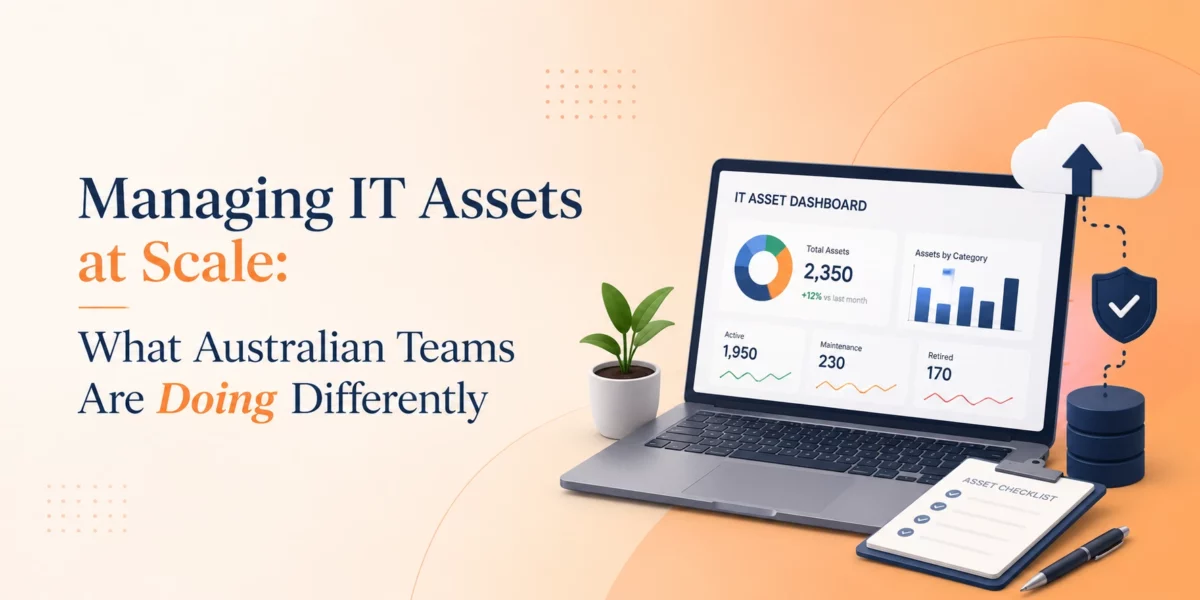
Australian businesses manage IT assets at scale by using centralised systems, automated tracking, lifecycle management, and stronger collaboration between IT and finance teams. These strategies improve visibility, reduce costs, and support compliance across large organisations.
As teams grow across cities and remote locations, keeping track of these assets becomes harder. Many Australian organisations now face rising costs, security risks, and compliance pressure linked to poor asset visibility.
This is why IT asset management in Australia has become a key focus for enterprise teams. Companies want better control over devices, software, licences, and employee equipment across the full asset lifecycle.
In this blog, we will explore what Australian teams are doing differently, the common challenges they face, and the strategies helping them improve asset control across large organisations.
See how Genic Assets locates equipment in seconds and keeps maintenance on schedule — book a free demo.
Australian businesses achieve waste reduction through IT asset management, which also strengthens their security systems while maintaining compliance and controlling technology expenses for their expanding operations.
All businesses depend on technology as their essential operating system. IT assets function as essential tools that enable organisations to run their operations and protect their customer information throughout their entire organisational structure. Businesses experience major operational challenges when their asset management system fails to deliver adequate performance.
When assets are poorly managed, businesses face problems such as:
Large organisations often manage thousands of devices across offices, warehouses, retail stores, and remote teams. Without a clear system, visibility becomes limited.
This has increased demand for enterprise IT asset management in Australia, especially among industries such as:
These sectors deal with strict compliance requirements and distributed operations, making asset visibility essential.
Australian enterprises are replacing manual asset tracking methods with scalable and automated systems that support long-term operational growth
Australian enterprises are moving beyond traditional asset tracking methods. Teams now focus on scalable frameworks that support long-term growth.
Earlier, asset management often involved:
Today, businesses are adopting structured asset lifecycle management. This includes planning, procurement, deployment, maintenance, tracking, and disposal.
This shift supports better operational control and stronger decision-making.
Many organisations investing in asset management solutions in Australia now prioritise:
The goal is simple: to reduce waste and improve efficiency.
Managing assets at scale comes with several challenges. Australian teams often deal with complex operating environments, remote workforces, and growing security expectations.
Remote work introduced new methods that companies now use to handle their device management systems. Employees now access systems from homes, shared offices, and field locations.
This creates issues such as:
Australian companies protect their IT assets through powerful management systems that grant them total operational control for all devices running in different parts of their network.
Australian organisations must comply with industry standards and privacy regulations. Untracked devices increase the risk of security breaches.
Businesses need to know:
This is one reason many enterprises invest in IT asset tracking software in Australia to improve monitoring and reporting.
Technology spending continues to rise. Businesses want to avoid buying unnecessary hardware or renewing unused licences.
Without proper tracking, companies often:
Asset visibility helps finance and IT teams make smarter spending decisions.
Leading organisations across Australia are improving asset management through smarter processes and better planning.
Many enterprises now maintain a single source of truth for all IT assets.
This includes:
Centralised records reduce confusion and improve accountability.
Teams using asset tracking tools in Australia can quickly identify unused or outdated assets across departments.
Manual asset management slows teams down. Automation improves accuracy and reduces human error.
Australian enterprises now automate tasks such as:
Automation also supports faster onboarding and offboarding processes.
This is why demand for IT asset tracking software for enterprises in Australia continues to grow among large organisations.
High-performing teams focus on the full asset lifecycle instead of short-term inventory control.
Lifecycle management includes:
This approach reduces waste and extends hardware value.
Many organisations also connect lifecycle planning with sustainability goals by reducing unnecessary hardware replacement.
Australian businesses increasingly involve finance teams in asset management decisions.
IT and finance departments now work together to:
This improves budgeting accuracy and reduces operational waste.
Successful businesses follow standard policies, maintain accurate records, conduct audits, improve security, and plan for future growth.
Businesses that manage assets successfully usually follow clear operational standards.
Here are some proven IT asset management best practices in Australia.
Every organisation should define clear asset usage policies.
This includes:
Clear policies improve consistency across teams.
Asset records should stay updated throughout the lifecycle.
Important details include:
Accurate records support compliance and reduce confusion during audits.
Routine audits help businesses identify missing, inactive, or duplicated assets.
Audits also improve security by detecting unauthorised software or unmanaged devices.
Many enterprises conduct quarterly or biannual asset reviews to maintain control.
Every device connected to company systems creates a security risk if unmanaged.
Strong security practices include:
Asset management and cybersecurity now work closely together across many Australian organisations.
Businesses should choose processes that support future growth.
This means preparing for:
Scalable asset management prevents operational bottlenecks later.
Businesses manage IT assets at scale by standardising workflows, improving visibility, using real-time reporting, and supporting employee productivity.
Many growing enterprises ask: How to manage IT assets at scale in Australia without increasing operational complexity?
The answer lies in combining people, process, and technology.
Large organisations need consistent asset workflows across offices and departments.
This includes standard processes for:
Consistency improves efficiency and reporting accuracy.
Businesses should ensure that IT, finance, procurement, and security teams can access the same asset information.
Shared visibility improves collaboration and speeds up decision-making.
Real-time reporting helps teams monitor asset health and usage trends.
This supports:
Better reporting also helps leadership teams make informed operational decisions.
Employees expect fast access to working devices and systems.
Poor asset management often leads to:
Efficient asset operations improve productivity and employee satisfaction.
Australian businesses will continue investing in smarter IT hardware asset management strategies over the coming years. Several trends are shaping the future:
More enterprises will automate asset tracking, reporting, and maintenance tasks to improve efficiency.
Asset management systems will become more connected with cybersecurity operations to reduce risks.
Businesses will focus more on extending hardware life and reducing electronic waste.
Sustainable asset practices will become part of broader environmental strategies.
Advanced reporting will help enterprises forecast technology needs and improve budgeting decisions.
If you are looking for an effective asset management solution for better management, try Genic Assets Management Software Solutions!
The operational task of managing IT assets at scale has evolved into a more strategic responsibility. The system operates as a core security element that protects organisational systems while maintaining compliance requirements, boosting worker efficiency, and controlling operational expenses.
The demand for IT asset management in Australia has developed through time because major business organisations needed to manage their assets efficiently. Organisations that build organised systems with modern tracking solutions will achieve better operational understanding, which brings ongoing business advantages.
Businesses throughout Australia need to maintain scalable asset management systems because their technological environments have grown more complex.
Articles you might like

Genic Assets provide complete visibility, traceability, and accountability of your assets!
Get StartedAre you ready to switch from Excel and Spreadsheets to Cloud-based Asset Management Software? Get started with Genic Assets Management System!