Please don't fall for any job/grants/SaaS/Software related scams. For any query or concerns please reach to us directly at +65 6834 3026 or WhatsApp at +65-8910 8216
Please don't fall for any job/grants/SaaS/Software related scams. For any query or concerns please reach to us directly at +65 6834 3026 or WhatsApp at +65-8910 8216
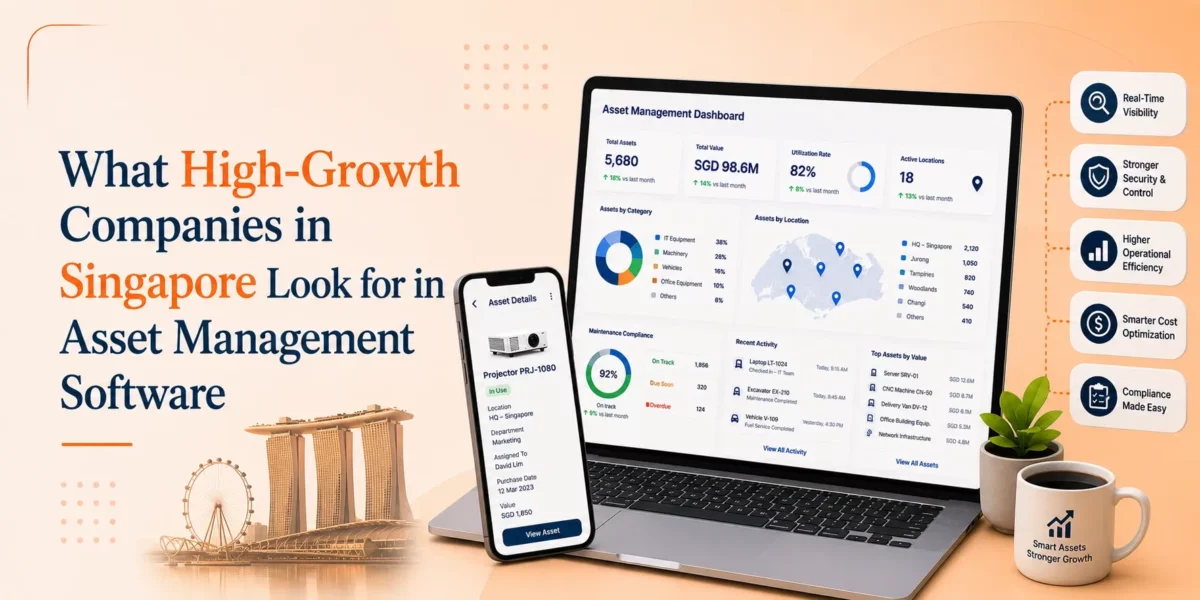
Fast-growing companies in Singapore look for asset management systems that support scalability, automation, real-time visibility, integration, and operational control. Businesses want solutions that improve efficiency while supporting long-term expansion.
As teams expand, assets become harder to track. Laptops move between departments. Equipment gets replaced, software licences expire, and inventory records become outdated. These small gaps in tracking often lead to larger operational problems.
This is why many firms now invest in asset management software in Singapore. The goal is not only to track assets, but companies also want better visibility, smoother workflows, and stronger control over business operations.
In this guide, you will learn what high-growth companies expect from modern asset management systems, along with how businesses can choose the right solution for future expansion and more.
See how Genic Assets locates equipment in seconds and keeps maintenance on schedule — book a free demo.
Asset management helps growing businesses improve visibility, reduce operational waste, control costs, and maintain accurate records across departments and locations. Every business depends on assets. These include:
As businesses grow, asset records often become scattered across different teams. This creates several issues:
Good asset management software helps businesses avoid these problems by keeping all asset information in one place. Companies can track:
This improves operational control and reduces waste.
Scalable asset tracking helps businesses manage larger volumes of assets, multiple locations, remote operations, and future growth without rebuilding existing systems.
Many companies in Singapore now focus on scalable asset tracking because business growth rarely remains predictable.
A company may:
When this happens, manual tracking methods usually fail.
Scalable systems support growth without forcing businesses to rebuild their entire asset process later. This is one reason why scalable asset management software in Singapore has become a priority for modern businesses.
High-growth firms want systems that:
Flexibility has become just as important as tracking itself.
Growing businesses look for features such as real-time visibility, scalability, automation, cloud access, reporting, and asset lifecycle management in software.
Companies want accurate information at all times, where real-time tracking helps teams know:
Without visibility, businesses lose time searching for equipment or correcting records.
Real-time monitoring also supports faster decision-making. Managers can spot unused assets, reduce duplicate purchases, and improve resource allocation.
For growing businesses, visibility becomes critical once assets spread across multiple teams or locations.
The fast development of businesses creates new demands that need an urgent response. Businesses that start as small offices encounter operational problems when their organisations grow past their initial establishment. High-growth businesses in Singapore need asset management software that allows them to handle their expanding operational requirements.
Scalable systems should allow businesses to:
Companies prefer systems that grow with them instead of requiring replacement after a few years.
Modern businesses no longer focus only on asset tracking but also want complete asset lifecycle management in software. Lifecycle management covers every stage of an asset, including:
This helps businesses understand:
Lifecycle management also improves budgeting and planning. For example, companies can forecast when devices will need replacement instead of reacting after failures occur.
Hybrid work remains common across Singapore. Employees often work:
Because of this, businesses prefer cloud-based systems that allow access from anywhere. Cloud access helps:
It also reduces dependence on local infrastructure. With it, many firms now see remote access as a standard requirement rather than an added feature.
Manual processes consume time and increase errors. Growing businesses, therefore, look for automation features such as:
Automation improves consistency and reduces repetitive administrative work. This allows teams to focus on operational tasks instead of manual record-keeping. Automation also supports stronger compliance and audit preparation.
Reporting and analytics help businesses to track asset performance, control costs, improve planning, and support operational decision-making. Data plays a major role in business growth.
Companies want reports that help them understand:
Strong reporting features allow businesses to make informed decisions.
For example:
High-growth firms often rely on data when planning expansion. Asset reporting supports these decisions by improving operational visibility.
This is one reason enterprise asset management in Singapore continues to grow across larger organisations.
Security remains a major concern for businesses in Singapore.
Asset records often contain sensitive information such as:
Therefore, companies expect strong security controls, including:
Compliance also matters for regulated industries such as:
Accurate asset records help businesses prepare for audits and maintain operational accountability.
Integration improves operational efficiency by connecting asset management with HR, procurement, accounting, inventory, and IT support systems.
Growing companies rarely use one standalone platform.
Most businesses already operate systems for:
Because of this, firms often prioritise enterprise asset management in Singapore that supports integration with existing workflows.
Connected systems reduce duplicate data entry and improve operational efficiency.
For example:
Integration helps businesses maintain consistency across departments.
Many companies make mistakes such as choosing low-cost systems, ignoring future scalability, and overlooking user experience during software selection.
Many businesses rush into software selection without long-term planning.
This often creates operational problems later.
Low-cost systems may lack:
Companies sometimes spend more later when replacing unsuitable systems.
Some businesses choose systems based only on current asset volumes. High-growth companies avoid this mistake by planning for expansion early. This is why scalable asset tracking in Singapore has become a major focus for growing firms.
Complex systems reduce adoption. Employees may avoid updating records if the platform feels difficult to use. As businesses prefer systems with:
Ease of use improves accuracy and long-term adoption.
Businesses should choose software based on scalability, integration, reporting capabilities, ease of use, and long-term operational requirements. Below are several important steps when deciding how to choose asset management software in Singapore.
Start by identifying:
Different industries often require different tracking approaches.
Choose systems that support future growth.
Scalable asset management software in Singapore should handle:
Long-term flexibility matters more than short-term convenience.
Software should fit existing business processes instead of creating disconnected workflows. Always check whether the system supports:
Integration improves efficiency across departments.
Good reporting supports better planning. So, businesses should review:
Strong insights help businesses manage costs and improve operations.
Employees use asset systems daily. A complicated system often creates poor adoption and inaccurate records. Simple interfaces improve consistency and reduce training time.
If you are looking for an effective asset management solution for better management, try Genic Assets Management Software Solutions!
Overall, Growth creates complexity inside every organisation. Asset tracking becomes harder as businesses expand across teams, offices, and regions.
This is why many companies now invest in asset management software in Singapore that supports long-term scalability and operational control.
Modern businesses want more than simple tracking tools. They look for:
Scalable systems help businesses stay organised while supporting future expansion. Businesses in Singapore that buy scalable asset tracking systems will boost their operational effectiveness through cost savings and better business planning activities.
Organisations need to assess their current operations and future expansion targets before selecting a suitable solution.
Businesses that plan early usually avoid expensive operational problems later. The digital operation growth in Singapore requires asset management to function as a fundamental business system that supports sustainable business development.
Articles you might like

Genic Assets provide complete visibility, traceability, and accountability of your assets!
Get StartedAre you ready to switch from Excel and Spreadsheets to Cloud-based Asset Management Software? Get started with Genic Assets Management System!