Please don't fall for any job/grants/SaaS/Software related scams. For any query or concerns please reach to us directly at +65 6834 3026 or WhatsApp at +65-8910 8216
Please don't fall for any job/grants/SaaS/Software related scams. For any query or concerns please reach to us directly at +65 6834 3026 or WhatsApp at +65-8910 8216
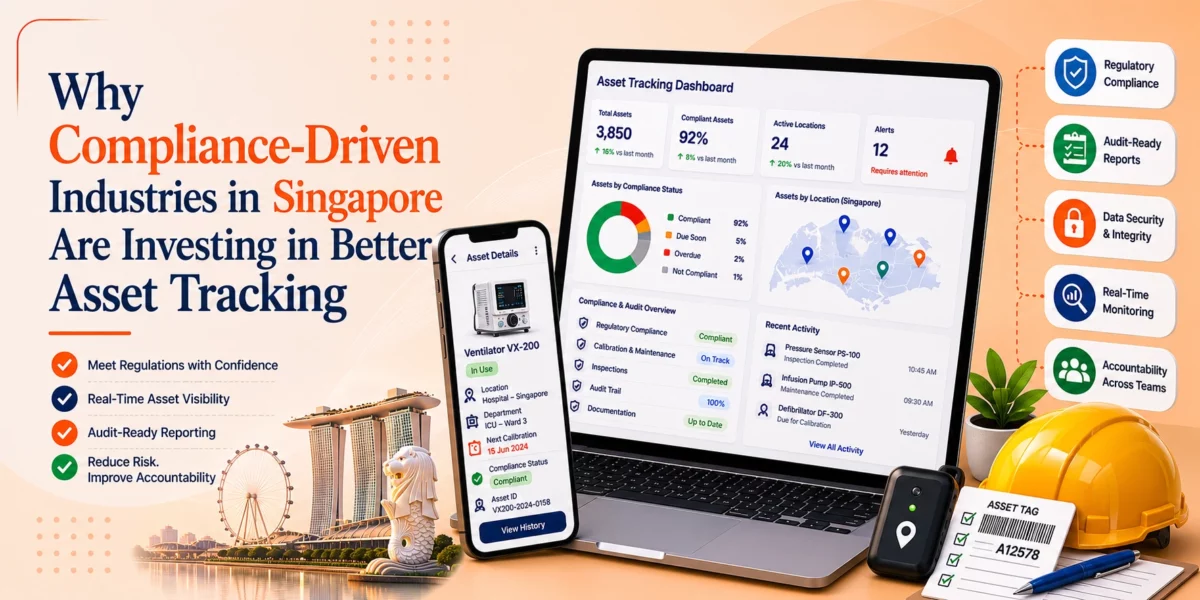
Compliance-driven industries in Singapore are investing in better asset tracking to improve regulatory compliance, maintain accurate asset records, support audits, reduce operational risks, and strengthen accountability across their organisations.
Businesses in regulated sectors face growing pressure to maintain accurate records, protect sensitive information, and meet strict reporting requirements. In Singapore, industries such as finance, healthcare, logistics, government services, and telecommunications must demonstrate clear control over their assets throughout their lifecycle.
This requirement has made asset compliance tracking in Singapore a key priority for organisations that want to reduce risk and maintain operational accountability. Many organisations are now investing in better tracking processes and digital systems to improve visibility and strengthen compliance.
See how Genic Assets locates equipment in seconds and keeps maintenance on schedule — book a free demo.
Asset compliance has become a business priority because organisations must maintain accurate asset records, meet regulatory requirements, reduce operational risks, and prepare for audits more efficiently.
Organisations need to keep their asset information complete and precise because regulatory bodies require them to do so. The security needs of various industries depend on their asset documentation, which also helps businesses to fulfill financial reporting obligations, manage operational risks, and maintain operational control.
Businesses need to respond to fundamental questions, which include:
Businesses face two types of risks that affect their operations and legal compliance because their records show missing information, together with information that appears outdated. The absence of essential information creates audit difficulties, which lead to security problems and make it hard to show compliance with regulatory standards.
Singapore businesses need asset tracking to fulfill their compliance requirements, which has become an essential business operation. Organisations desire to monitor their entire business operations through their different areas and locations while they maintain correct asset documentation during every stage of asset management.
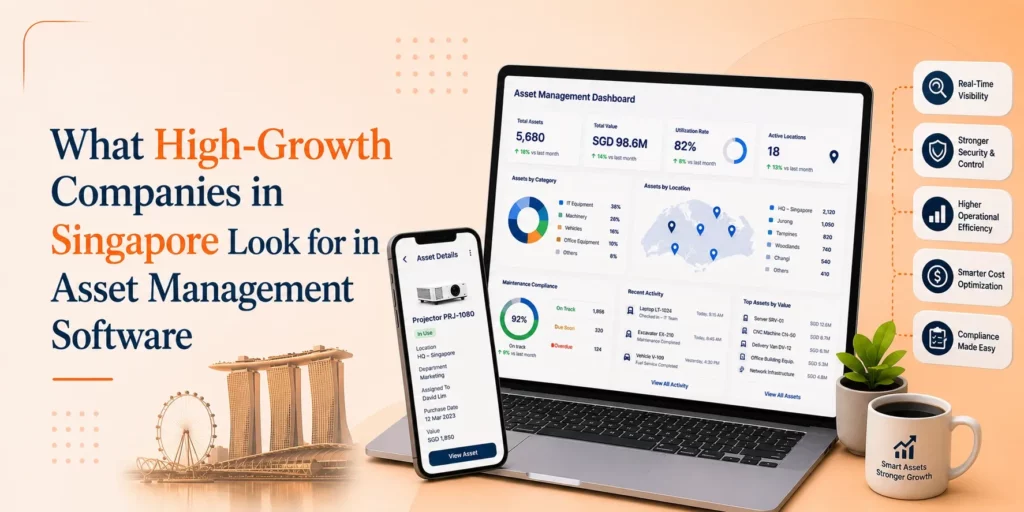
Also Read: What High-Growth Companies in Singapore Look for in Asset Management Software
Asset management is becoming more complex because assets move across locations, compliance requirements continue to increase, and businesses must manage larger asset inventories across hybrid work environments.
Many organisations manage hundreds or even thousands of assets across multiple offices, warehouses, branch locations, and remote work environments.
As businesses expand, several challenges often occur, which are:
Employees must switch between various departments during their time on new teams because their work requires them to operate from distant locations, and they need to shift their physical presence between different office spaces. Organisations need to move their equipment from one location to another while they decide between upgrading their existing assets or switching to different models.
Organisations fail to keep accurate records because their tracking systems do not work correctly.
Multiple industries face rising compliance requirements that demand more from their operational activities. Organisations need to show their asset ownership through maintenance records, usage history, and disposal documentation.
The current spreadsheet system fails to handle all the required functions which users need to perform.
Organisations need to show auditors proof of their asset management systems. The lack of required information leads to lengthy investigations, which produce additional administrative work.
Employees today spend their work hours at home, while they also need to travel for business and manage operations from various workplace sites. The present system prevents users from seeing assets because it lacks proper tracking capabilities.
Businesses need to develop better operational systems and compliance technology because current challenges demand improved organisational control.
Better asset tracking supports compliance by improving visibility, strengthening record-keeping, reducing asset loss, and helping organisations enforce internal policies.
Effective asset tracking provides a complete record of every asset from acquisition through disposal.
This level of visibility helps organisations maintain compliance in several ways.
Businesses need accurate information about their assets at all times. A modern asset tracking system helps organisations maintain current records regarding:
When information is updated consistently, businesses can respond quickly to audit requests and compliance reviews.
Regulatory reviews often require historical records. Businesses must demonstrate when assets were purchased, assigned, maintained, transferred, or retired.
Detailed records help businesses show that proper procedures were followed throughout the asset lifecycle.
Lost or unaccounted assets can create serious compliance concerns, particularly when sensitive information is involved.
Accurate tracking reduces the likelihood of assets disappearing without explanation. This helps to maintain accountability and strengthen internal controls.
Many organisations have policies governing how assets are used, maintained, and secured.
Tracking systems help businesses monitor compliance with these policies and identify potential issues before they become larger problems.
Audit-ready asset management helps organisations prepare for audits faster by maintaining accurate, centralised, and accessible asset records.
Audits can be time-consuming when records are scattered across departments or stored in multiple formats.
Businesses increasingly recognise the value of audit-ready asset management in Singapore because it simplifies preparation and improves confidence during regulatory reviews.
Rather than searching through spreadsheets, emails, and paper documents, organisations can access complete asset records from a central source.
This approach provides several benefits.
When asset information is organised and accessible, audit preparation becomes more efficient. Teams spend less time gathering records and more time focusing on business priorities.
Centralised records reduce inconsistencies between departments. Accurate information helps organisations avoid unnecessary questions and delays during audits.
Audit-ready processes establish clear ownership and responsibility for assets. This creates stronger governance across the organisation.
Many regulatory frameworks require organisations to demonstrate control over assets. Accurate records simplify reporting requirements and support ongoing compliance efforts.
For these reasons, many organisations are investing in audit-ready asset management in Singapore as part of broader risk management strategies.
Audit trails matter because they provide a complete history of asset activities, helping organisations demonstrate accountability and compliance during audits.
One of the most important elements of compliance is the ability to demonstrate what happened, when it happened, and who performed the action.
This is where an audit trail for asset management becomes valuable. An audit trail creates a historical record of asset-related activities.
Examples include:
These records provide transparency and accountability throughout the asset lifecycle.
When auditors request evidence, organisations can demonstrate that assets have been managed according to established policies and procedures.
Strong audit trails also support internal investigations and help identify process weaknesses before they create larger compliance issues.
Technology improves compliance asset management by centralising asset records, automating updates, supporting reporting, and improving operational control.
Manual processes often struggle to keep pace with modern compliance requirements. Many organisations are turning to compliance asset management software in Singapore to improve accuracy and operational control. Digital solutions help organisations maintain current records while reducing administrative effort.
Automated processes help ensure asset information remains accurate as changes occur. This reduces the risk of outdated records and improves overall data quality.
A single source of asset information improves visibility across departments. Teams can access consistent records without relying on multiple spreadsheets or disconnected databases.
Current asset data supports faster decision-making and stronger compliance oversight. Managers can quickly identify issues that require attention.
Standardised workflows help organisations apply policies consistently across all locations and departments. This reduces variation and strengthens governance.
As compliance requirements continue to evolve, businesses increasingly view digital asset management as a strategic investment rather than an administrative function.
Regulated industries are leading asset tracking adoption because they face stricter compliance requirements, higher audit expectations, and greater operational risks.
Although many organisations benefit from better tracking, regulated industries often face the greatest pressure to maintain accurate records.
Financial institutions protect their entire technology inventory together with all their sensitive data, which they actively manage.
The ability to track assets at all times enables organisations to meet their governance needs, security demands, and regulatory reporting requirements.
Healthcare facilities need to maintain their equipment while tracking its movement and recording all information from start to finish of its operational life.
The practice of keeping accurate records helps hospitals reach their goal of protecting patients while following all necessary healthcare rules.
Logistics companies operate their assets across various sites, which need continuous monitoring for maintaining operational direction.
Tracking systems improve accountability and support compliance requirements.
Public sector organisations need to show proper resource management through detailed record-keeping, which supports their accountability responsibilities.
Telecommunications providers need to keep track of their entire infrastructure equipment collection because they must handle proper documentation and equipment maintenance during their full operational lifespan.
The first investments in regulatory asset tracking solutions appear in these industry sectors because their regulatory breaches create financial penalties, together with operational shutdowns and damage to their public image.
Businesses look for compliance tracking solutions that offer scalability, accurate records, reporting capabilities, security controls, and lifecycle management features.
When evaluating solutions, organisations focus on features that support both compliance and operational efficiency.
Businesses want systems that can support future growth without requiring major changes.
Reliable data remains essential for compliance reporting and audit preparation.
Organisations need reports that support audits, reviews, and management decision-making.
User permissions help protect sensitive information and support governance requirements.
Complete lifecycle visibility improves planning and strengthens compliance oversight.
Many businesses prefer solutions that connect with existing operational processes.
A modern asset management system helps organisations manage assets efficiently while supporting broader compliance objectives.
Audit-ready systems support long-term growth by improving operational efficiency, reducing risk, strengthening governance, and simplifying compliance management.
Compliance is often viewed as a regulatory requirement, but strong asset management practices also deliver operational benefits.
An audit-ready asset management system in Singapore helps organisations improve efficiency while maintaining accountability.
Benefits often include:
These advantages support both compliance and business performance.
As organisations grow, maintaining accurate records becomes more challenging. Structured processes help businesses scale while preserving operational control.
This explains why many organisations now consider asset management an essential part of long-term business planning.
If you are looking for an effective asset management solution for better management, try Genic Assets Management Software Solutions!
The growing focus on asset compliance tracking in Singapore reflects a broader shift towards stronger governance, accountability, and operational control. Organisations across regulated industries recognise that accurate asset records are essential for meeting compliance requirements and reducing risk.
Businesses need to move past their basic asset inventories because they require organised systems that provide management tools for their assets.
The demand for asset management solutions that offer full audit path visibility, together with compliance tracking and enhanced record precision, has started to grow rapidly. Industries in Singapore now concentrate on audit-ready asset management because they need to prepare for audits, handle risks, and enhance their operational monitoring systems.
Business operations need protection because regulatory requirements keep changing, so businesses should build better tracking systems to protect their operations, achieve growth, and stay secure.
Articles you might like
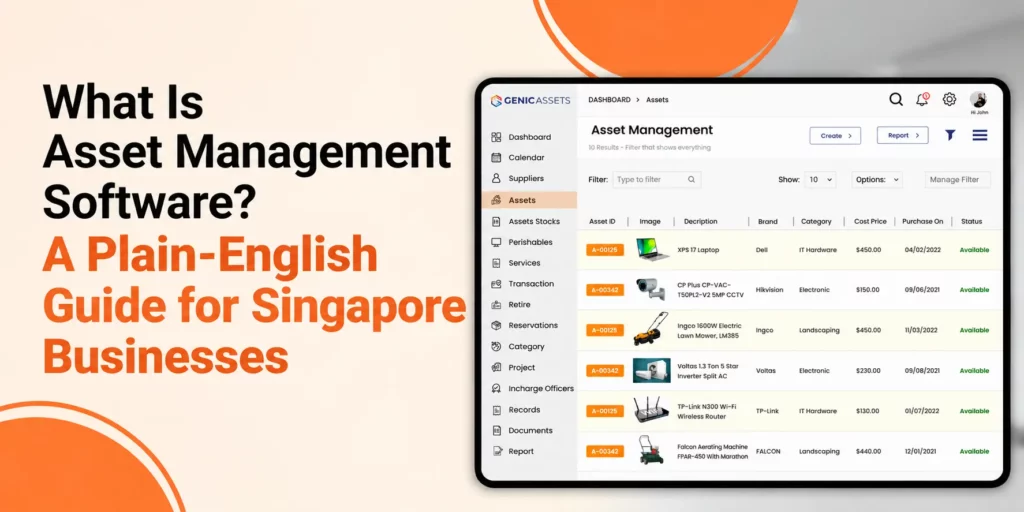

Genic Assets provide complete visibility, traceability, and accountability of your assets!
Get StartedAre you ready to switch from Excel and Spreadsheets to Cloud-based Asset Management Software? Get started with Genic Assets Management System!