Please don't fall for any job/grants/SaaS/Software related scams. For any query or concerns please reach to us directly at +65 6834 3026 or WhatsApp at +65-8910 8216
Please don't fall for any job/grants/SaaS/Software related scams. For any query or concerns please reach to us directly at +65 6834 3026 or WhatsApp at +65-8910 8216
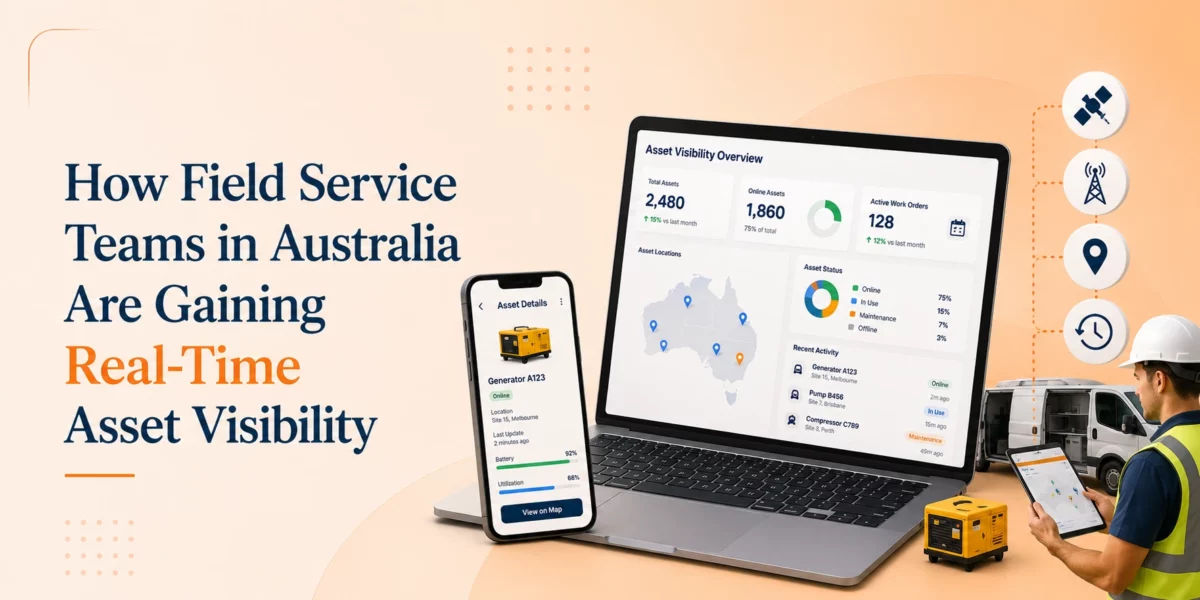
Field service teams in Australia are gaining real-time asset visibility through mobile tracking systems, live data access, and connected field operations that help businesses monitor equipment, vehicles, and tools across multiple locations.
Without clear visibility of these assets, delays happen, which is where the equipment goes missing. Jobs slow down, which leads to costs rising along with the bad customer experiences.
This is why many businesses now focus on field asset tracking in Australia. Real-time visibility helps field teams know where assets are, who is using them, and when maintenance is due. It also helps managers make faster decisions and improve service delivery.
In this blog, we will explore how field service companies are improving operations with real-time asset visibility and why this shift matters for Australian businesses.
See how Genic Assets locates equipment in seconds and keeps maintenance on schedule — book a free demo.
Asset visibility matters because field service businesses need accurate information about equipment, tools, and vehicles to reduce delays, improve productivity, and control operating costs.
Field service businesses manage many moving parts each day. Teams work across different locations, often in remote areas.
Assets move between warehouses, service vehicles, customer sites, and temporary storage spaces. When businesses cannot track these assets properly, several problems appear:
Real-time visibility solves these issues by helping businesses track assets throughout the workday.
Many companies now use field service asset visibility solutions Australia businesses can rely on to improve operational control and reduce downtime.
Real-time asset visibility means businesses can monitor the location, condition, and availability of field assets instantly through connected tracking systems.
This may include:
With real-time asset tracking for field service in Australia, teams receive instant updates instead of waiting for manual reports or phone calls. Managers can quickly answer questions such as:
This level of visibility supports faster and better decisions.
Field asset tracking is growing across Australia because businesses need better control over equipment across remote locations, mobile workforces, and large service regions.
Australian field service businesses face unique challenges. Teams often travel long distances between jobs. Many companies also operate in mining regions, rural communities, and remote industrial areas. Because of this, asset management becomes harder without proper systems in place.
Industries that demand field asset tracking in Australia include:
These industries depend on reliable equipment and quick response times. Delays caused by missing assets can affect revenue and customer trust.
Mobile technology is changing asset tracking by giving field teams instant access to live asset data from any location.
Field teams no longer rely on paper records or spreadsheets alone. Mobile technology now plays a major role in field operations.
A modern asset tracking mobile app in Australia helps technicians update asset information directly from the field. This creates faster communication between field workers and office teams. Technicians can:
This reduces manual work and improves data accuracy. Many businesses now invest in mobile asset tracking software in Australia to support field teams working across multiple locations.
Real-time asset tracking improves job completion speed, technician productivity, maintenance planning, and equipment control for field service teams.
Technicians waste less time searching for tools or equipment when asset locations are visible in real time. This allows teams to:
Real-time tracking also helps dispatch teams assign the nearest available asset to urgent jobs.
Field workers perform better when they have clear access to asset information.
A mobile asset tracking app for technicians in Australia allows workers to check equipment details from mobile devices while on-site.
This reduces calls to the office and speeds up decision-making.
Technicians can also:
The result is smoother daily operations.
Lost assets create major costs for field service businesses. Small tools and expensive equipment can disappear during transport or between job sites.
Real-time visibility reduces these losses.
Businesses using mobile workforce asset tracking systems can monitor asset movement and identify missing equipment quickly. This creates stronger accountability across teams.
Equipment failures often happen because maintenance schedules are missed.
Real-time monitoring helps businesses track:
This supports preventive maintenance and reduces unexpected downtime.
Many companies now rely on mobile asset monitoring software to improve equipment reliability and extend asset lifespan.
Real-time asset tracking supports customers by improving response times, communication, and first-time fix rates.
Customers expect fast and reliable service. Delays caused by missing equipment or poor communication damage customer confidence. Real-time tracking improves customer service in several ways.
Field teams can locate nearby assets quickly and respond to urgent service requests faster. This is important for industries where downtime affects business operations.
Managers can track technician progress and provide better arrival estimates to customers, which improves communication and reduces frustration.
When technicians know which tools and spare parts are available before arriving on-site, they complete more jobs during the first visit.
This improves customer satisfaction and reduces return trips.
Data helps businesses improve asset performance, technician efficiency, and operational planning through real-time reporting. Data is a key part of modern asset management. Every asset movement creates useful information that businesses can analyse to improve operations.
Real-time tracking systems help companies understand:
This data supports stronger planning and budgeting decisions. It also helps businesses improve their overall asset management system strategy.
Mobile access is essential because field technicians need live information while working across different service locations.
Field service teams work outside the office for most of the day. Mobile access is now essential for efficient operations.
An effective asset tracking system should support mobile access so technicians can update information from any location.
This is especially important in Australia, where teams often operate across large service regions. Mobile access allows workers to:
These features improve communication between office staff and field workers.
Businesses without real-time visibility often face poor asset control, rising costs, delayed reporting, and compliance risks.
Businesses that still use manual tracking methods often face ongoing operational issues.
Without accurate tracking, businesses lose visibility over equipment movement, which creates confusion about asset ownership and availability.
Missing equipment and delayed jobs increase operating expenses. Businesses may also purchase duplicate equipment because they cannot locate existing assets.
Manual reporting slows down the decision. Due to this, managers may only get correct updates at the end of the day or week.
Some industries require strict asset inspection and maintenance records. Because poor tracking increases the risk of compliance failures.
Industries that rely on mobile workforces, equipment management, and fast service delivery benefit the most from real-time asset tracking.
Utility teams manage large networks of field assets across wide geographic areas. With Real-time visibility, it helps to improve maintenance response and equipment management.
Telecommunications providers rely on field technicians to maintain network infrastructure.
Tracking tools and equipment improve service reliability.
Construction service teams often move assets between sites, where Real-time tracking reduces equipment loss and improves coordination.
Healthcare technicians manage medical devices and sensitive equipment. Accurate tracking supports safety and service quality.
Asset tracking improves workforce coordination by helping office teams and field workers share the same real-time information.
Field service success depends on strong coordination between office teams and field workers.
Real-time tracking supports better communication by giving everyone access to the same information.
Managers can:
This improves operational flexibility. Many businesses now connect their tracking tools with a broader asset management software in Australia strategy to improve long-term planning and reporting.
Businesses should look for asset tracking solutions that offer mobile access, real-time updates, maintenance tracking, reporting tools, and scalability. Businesses should focus on practical features that support daily field operations.
Technicians need tools that are easy to use in the field, while complex systems often create frustration and poor adoption.
Information should update instantly across teams because delayed updates reduce visibility and decision-making speed.
A strong tracking solution should support preventive maintenance planning.
Businesses need access to reports that support operational analysis and budgeting.
As businesses grow, tracking systems should support more users, assets, and locations.
The future of field asset tracking in Australia will focus on mobile operations, stronger data integration, preventive maintenance, and greater operational visibility.
Demand for real-time visibility will continue to grow across the Australian field service industries. Several trends are shaping the future of asset tracking.
Field service businesses are becoming more mobile-focused. Teams now expect access to information from anywhere. This will increase demand for flexible mobile solutions.
Businesses want tracking systems connected with scheduling, maintenance, inventory, and reporting tools, which create a more complete operational view.
Companies are moving away from reactive maintenance models, where Real-time data helps businesses identify issues before equipment fails.
Managers want full visibility across assets, technicians, and service activity. This supports better decision-making and long-term growth.
Real-time visibility is no longer a nice extra for field service businesses. It has become a core operational need.
Companies that improve asset visibility can:
As competition increases across Australian industries, businesses need faster and more reliable field operations.
This is why investment in field asset tracking in Australia continues to grow.
If you are looking for an effective asset management solution for better management, try Genic Assets Management Software Solutions!
Overall, Australian field service companies operate their asset management systems through new operational methods that they have implemented. The real-time tracking system allows teams to maintain complete control over their equipment and vehicles, together with their tools and inventory stock.
Field asset tracking in Australia enables businesses to enhance their operational efficiency through reduced equipment downtime and improved service delivery to customers. Field operations of today require immediate access to precise data that they need to operate.
Real-time tracking systems allow businesses to improve their response times while they develop superior planning methods and achieve better operational efficiency. Businesses need to develop their asset monitoring systems because field service operations keep expanding at their current growth rate.
Articles you might like
Genic Assets provide complete visibility, traceability, and accountability of your assets!
Get StartedAre you ready to switch from Excel and Spreadsheets to Cloud-based Asset Management Software? Get started with Genic Assets Management System!